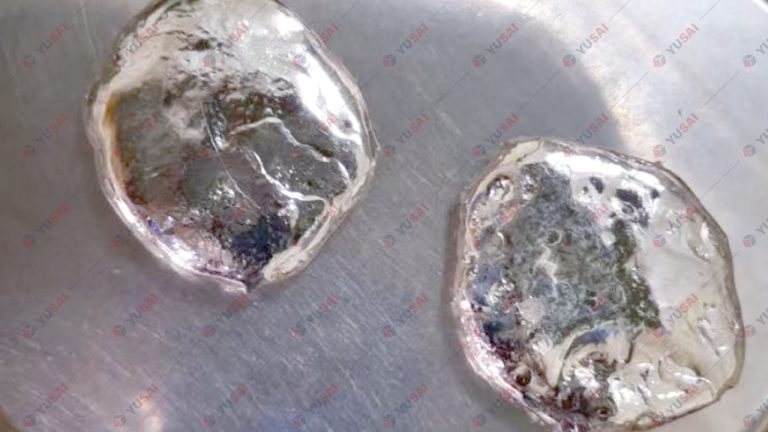
Gold electrolysis is a mature refining process for producing high-purity gold from crude gold anodes. The whole process is carried out inside acid-resistant electrolytic tanks, with strict control over electrolyte composition, temperature, current parameters and impurity management to guarantee gold purity and stable production.
1. Core Equipment
Acid-resistant porcelain tanks, plastic tanks or fiberglass tanks are adopted as electrolytic cells, which can withstand strong hydrochloric acid corrosion. Conductive bars and busbars are normally made of pure silver, while lifting hooks for anode plates are fabricated from pure gold to avoid contamination and ensure stable electrical conduction.
The electrolyte is not circulated. Small vacuum pumps or air pumps are used for air-blowing agitation inside the solution. High acidity and elevated temperature can raise the allowable current density threshold for anode passivation, so gold electrolysis is preferably operated under high-acid and moderate high-temperature conditions. Heat comes partly from Joule heating during current conduction. When extra heating is needed, water bath, sand bath or air bath heating can be applied underneath the electrolytic cells.
2. Impurity Control
Excessive copper and lead in crude gold anodes negatively affect electrolysis performance.
- Copper impurity: Both gold and copper dissolve from the anode, yet only gold deposits on the cathode. For every 1 g of copper dissolved at the anode, 2.5 g of gold will precipitate on the cathode. This phenomenon quickly reduces gold concentration in electrolyte and may trigger copper co-deposition on the cathode, downgrading gold purity. To solve this issue, the full electrolyte is replaced after two cathode cycles.
- Lead impurity: Lead generates lead chloride, which saturates the electrolyte and causes anode passivation. Proper sulfuric acid is added periodically during electrolysis to convert lead into lead sulfate, which settles into anode slime.
Crude gold anodes usually contain 4%–8% silver. Silver dissolves and forms silver chloride, which accumulates as anode slime covering the anode surface. The slime hinders anode dissolution, clouds the electrolyte and may lead to short circuits between electrodes. Operators must scrape anode slime 1–2 times every 8 hours. Before scraping, short the target cell with conductive bars, lift the anode plates gently to prevent slime suspension and solution turbidity. After scraping and water rinsing, the anodes are reinstalled for continuous electrolysis.
Cathode inspection is also required 1–2 times every 8 hours. No short-circuit is needed during inspection. Cathodes are lifted one by one to check gold deposition status. Sharp dendritic particles on cathode surfaces are removed to avoid short circuits.
3. Typical Technical Parameters
Parameter settings vary among refineries. One industrial proven set of operating conditions is listed below:
- Gold concentration in electrolyte: 250~350 g/L
- Hydrochloric acid: 250~300 g/L
- Area current density: 200~250 A/m²
- Cell voltage: 0.2~0.3 V
- AC voltage: 6~7 V
- Ratio of direct current to alternating current: 1 : 1.6~2.5
- Electrolyte temperature: 30~50 ℃
- Inter-electrode distance: 80~90 mm
- Cathode cycle: 80~100 h
Under these parameters, electrolytic gold with purity above 99.96% can be obtained.
4. Cathode Harvesting & Post-Treatment
When one cathode cycle finishes, electrolytic gold can be taken out without short-circuiting. Finished gold sheets are removed one by one, and new starting sheets are inserted continuously until all products are harvested.
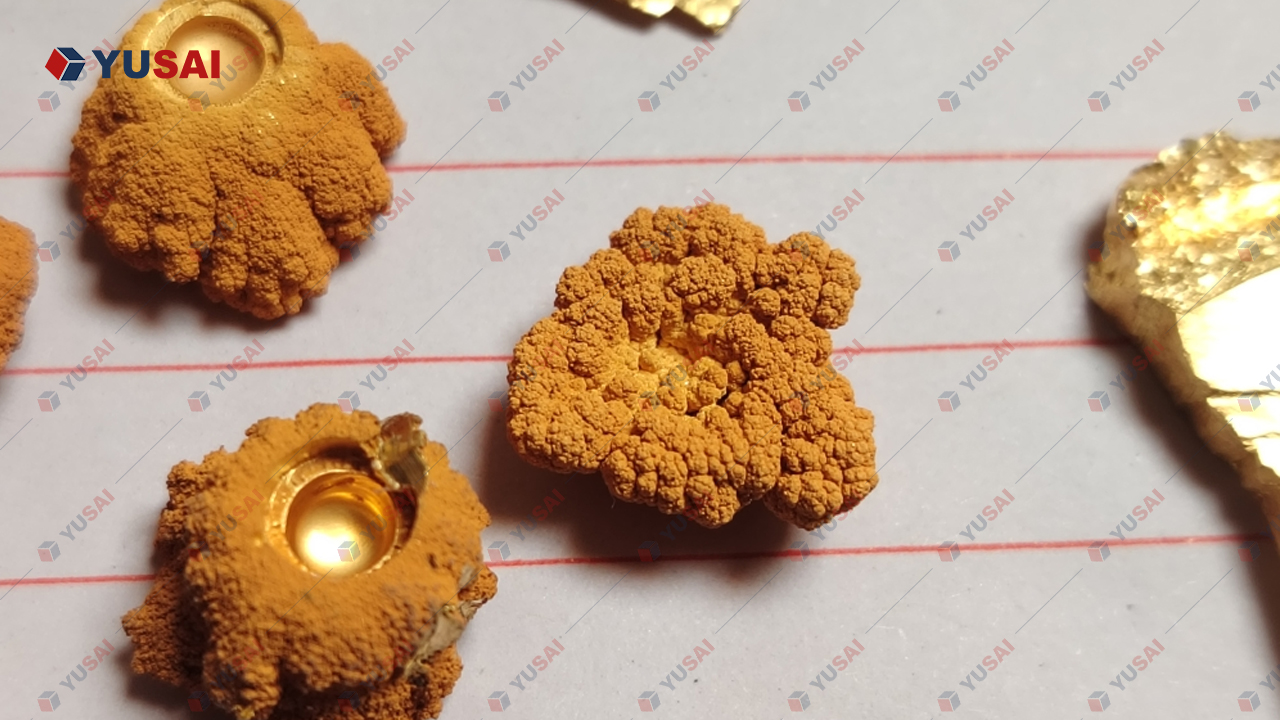
The harvested electrolytic gold is rinsed lightly to remove residual electrolyte. The ear lugs are cut off and recycled for anode recasting. The gold is then boiled in dilute ammonia water for 4 hours, cleaned thoroughly, followed by 8 hours of boiling in dilute nitric acid. After final washing and air drying, the gold product is ready for ingot casting.
5. Troubleshooting for Common Abnormalities
- Blackened cathode: It may be caused by insufficient acid concentration or impurity deposition. Excessively high current or voltage can also lead to black cathode surfaces.
- Green flocculent salt precipitates: High electrolyte density and low solution temperature cause polarization. Green gold-copper flocculent crystals form on the upper part of cathodes and may even fully cover anodes in severe cases.
Solutions: Add hydrochloric acid into the electrolyte, or partially / fully replace the electrolyte. Take out the affected cathodes, clean off all green crystalline deposits and return them to the cell to resume electrolysis.