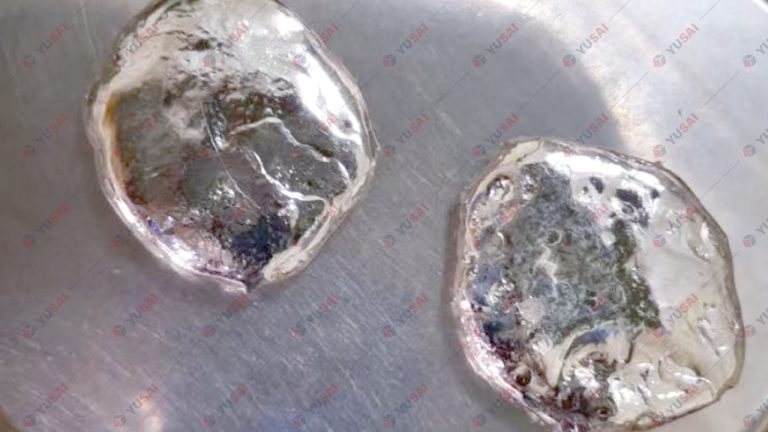
Rhodium ranks among the world’s most expensive platinum‑group metals (PGMs). Its extreme market value stems from geological scarcity, irreplaceable industrial performance, complex purification workflows and tight global supply‑demand balance. For industrial investors and refiners, rhodium recycling from secondary scrap resources becomes a highly profitable business segment supported by specialized metallurgical equipment and complete process solutions.
Why Rhodium Commands Such High Market Value
1. Extreme geological scarcity with no independent ore deposit
Rhodium never forms standalone mineable ore bodies. It exists merely as a minor by‑product of platinum, nickel and copper ore mining. Global annual primary rhodium output from mines is only around 20 tons, far lower than gold production volumes. More than 80% of global primary rhodium supply comes from South Africa. Supply is extremely inelastic: even sharp price surges cannot trigger fast output expansion. Local power outages, labour unrest or geopolitical shifts will directly shake global rhodium supply and push market prices upward.
2. Irreplaceable industrial catalytic performance
The single‑largest consumption field for rhodium lies in automotive three‑way catalytic converters, where it efficiently reduces toxic nitrogen‑oxide (NOₓ) exhaust. No low‑cost alternative material can match its high‑temperature stability and catalytic efficiency under vehicle exhaust conditions. Additional key applications cover platinum‑rhodium catalyst gauze for nitric‑acid manufacturing, glass‑fiber bushing alloys, homogeneous chemical catalysts, high‑end rhodium electroplating, and semiconductor sputtering targets. Many regions enforce stricter vehicle‑emission regulations, further boosting industrial demand for rhodium.
3. High technical barriers for separation and purification
Rhodium shares very similar chemical characteristics with platinum and palladium, and they always co‑exist within mineral concentrates and scrap feedstock. Rhodium features strong chemical inertness and a melting point reaching 1964 °C. Dissolution, selective separation and refining consume large amounts of chemicals and energy. Sophisticated process control and dedicated equipment are required to achieve high metal‑recovery rates and 99.95%‑plus final purity. Unavoidable metal losses during processing raise overall production costs significantlySemantic S….
4. Small trading volume with notable financial volatility
The global physical rhodium market has a tiny market cap. Automaker stockpiling, scrap‑supply fluctuation and capital trading activities may trigger dramatic price swings. Secondary recycled rhodium accounts for roughly 25‑30% of total global supply, yet cannot fully offset limited primary mine productionInternatio….
Major rhodium‑bearing secondary raw materials include spent automotive catalytic substrates, waste platinum‑rhodium catalyst gauze, rhodium‑on‑carbon catalysts, organic rhodium‑containing waste liquid, rhodium‑plated scrap, platinum‑rhodium bushing components and thermocouple wire scrap.
Industrial‑Grade Rhodium‑Recycling Process & Core Equipment
Modern commercial rhodium recovery mostly adopts a combined route: pyrometallurgical pre‑enrichment plus hydrometallurgical fine refining. Pure‑hydrometallurgical workflows apply for low‑concentration rhodium waste liquid and thin rhodium‑plated scraps.
Important note: Rhodium‑recycling operations generate hazardous waste, corrosive acidic vapour and heavy‑metal‑laden wastewater. Production facilities must implement full environmental compliance with dedicated exhaust‑gas and wastewater‑treatment infrastructure. Unregulated small‑scale primitive processing is strongly discouraged.
Step 1: Pre‑treatment for material enrichment
Objective: Crushing, decarbonization, removal of organic contaminants and preliminary concentration of rhodium from raw scrap.
Main equipment: Jaw crusher, ball mill, muffle furnace, rotary calcination furnace, thermal‑decomposition furnace, bag‑house dust‑removal system.
Typical workflow:
- For rhodium‑carbon and organic rhodium waste: Calcination at 600‑750 °C burns off activated carbon and organic impurities to obtain rhodium‑rich ash.
- For spent automotive catalytic converters: Crushing and screening. Optional alkali‑fusion or acid‑digestion removes alumina carrier material to concentrate platinum‑group metals into solid residues.
- For platinum‑rhodium alloy mesh / wire: Cutting and powdering to increase specific surface area, otherwise rhodium will be extremely difficult to dissolve in later leaching stages.
Step 2: Pyrometallurgical enrichment (bulk feedstock with high gangue content)
High‑temperature smelting with metal collectors such as copper, nickel or iron captures platinum, palladium and rhodium into molten alloy phases. Ceramic and alumina carrier materials form floating molten slag for separation and discard.
Main equipment: Medium‑frequency induction smelting furnace, electric‑arc furnace, casting moulds, complete flue‑gas‑purification set (dedusting + desulphurization & denitrification).
Process logic: Scrap feedstock mixed with fluxing agents and metal collectors is heated to 1100‑1500 °C. After melting completes, material separates into two layers: upper waste slag phase and lower precious‑metal‑rich collector alloy for downstream processing.
Advantages: Large processing throughput, good adaptability for complex‑impurity scrap. Drawbacks: High energy consumption and strict environmental‑protection requirements. Lead‑based collector technology is being phased out across the industry.
Step 3: Hydrometallurgical refining (core stage for high‑purity rhodium production)
This stage covers oxidative leaching, solid‑liquid separation, multi‑metal selective separation, chemical reduction and ingot casting, and determines final metal‑recovery efficiency and product purity.
3.1 Oxidative leaching
Rhodium’s chemical inertness makes dissolution the most technically challenging unit operation.
Core equipment: PTFE‑lined enamel reaction kettles, high‑pressure reaction autoclaves, chlorine‑feeding systems, heating‑stirring assemblies, tail‑gas absorption towers.
- Industrial mainstream: Chlorination leaching within hydrochloric‑acid media using chlorine gas or sodium chlorate oxidant under heating, converting metallic rhodium into soluble chlororhodic acid complex.
- Aqua‑regia dissolution works well for lab‑scale small‑batch rhodium powder or alloy samples, yet suffers slow dissolution kinetics and complicated nitrate‑removal procedures for mass production.
Critical practical requirement: Rhodium feedstock must be fine powder; bulk solid rhodium barely dissolves even under strong‑oxidant conditions.
3.2 Solid‑liquid separation
Equipment: Plate‑and‑frame filter press, vacuum filtration units, multi‑stage precision filter devices and rinsing tanks. Insoluble gangue residues are filtered away to yield mixed leach liquor containing platinum, palladium, rhodium and base‑metal impurities.
3.3 Selective separation of platinum‑palladium‑rhodium
This unit separates rhodium from co‑existing platinum, palladium and impurity base metals.
Equipment: Continuous centrifugal extractors, mixer‑settler solvent‑extraction banks, ion‑exchange resin columns.
Standard industrial workflow:
- Apply solvent‑extraction technology to remove platinum and palladium sequentially, leaving rhodium‑rich mother liquor.
- Adjust solution conditions to perform nitrite complexation or ammonium‑salt selective precipitation, generating insoluble hexanitrorhodate salts to separate rhodium from residual impurities.
- Convert precipitated rhodium back to hydrochloric‑acid chlororhodate system, and deploy ion‑exchange resins for deep impurity polishing.
3.4 Chemical reduction & washing
Equipment: Agitated reaction kettles, vacuum‑filtration stations. Reducing agents such as hydrazine hydrate or formic acid are added to precipitate black rhodium powder. Multiple cycles of acid washing and pure‑water rinsing eliminate soluble salt contaminants.
3.5 Melting and vacuum ingot casting
Equipment: Medium‑frequency smelting furnace with argon inert‑gas protection, vacuum ingot‑casting machines. Dried rhodium powder melts under inert‑atmosphere protection and is cast into metallic rhodium ingots with purity reaching 99.95% or higher.
Comparison Between Two Main Technical Routes
- Pyrometallurgical enrichment + hydrometallurgical refining (mainstream industrial solution) ✅ Suitable for: Spent catalytic converters, large volumes of rhodium‑carbon scrap, high‑carrier‑content waste catalysts; overall rhodium recovery rate 96‑99%, large throughput capacity. ❌ Higher capital investment, elevated power consumption, comprehensive environmental‑protection systems required.
- Pure hydrometallurgical workflow ✅ Suitable for: Rhodium‑containing waste liquid, rhodium‑stripping electroplating solution and relatively clean rhodium‑rich powder; simpler equipment layout without high‑temperature smelting sections. ❌ Poor performance for high‑alumina‑carrier raw materials; separation difficulty rises sharply for heavily‑contaminated feedstock, lowering overall recovery yield.
Full‑Set Key Equipment List for Rhodium‑Recycling Production Lines
- Pre‑treatment section: Crusher, ball mill, rotary calcination furnace, bag‑filter dust‑removal system
- Pyrometallurgical section: Medium‑frequency smelting furnace, complete flue‑gas treatment plant, water‑cooled slag‑reception vessels
- Hydrometallurgical section: PTFE‑lined reaction kettles, chlorine‑oxidation dosing system, tail‑gas absorption towers, plate‑and‑frame filter press, multi‑stage continuous solvent‑extraction units, ion‑exchange resin columns, pure‑water preparation systems
- Post‑processing section: Reduction reaction tanks, filtration assemblies, drying ovens, inert‑atmosphere smelting & vacuum ingot‑casting equipment
- Analytical instruments: ICP‑OES spectrometers for rhodium‑content testing and finished‑product purity verification
- Auxiliary facilities: NOₓ waste‑gas treatment system and heavy‑metal wastewater‑treatment station for full‑process compliance.
Core Industrial Bottlenecks for Rhodium Refining
- Low leaching efficiency represents the top risk factor. Incomplete rhodium dissolution leaves valuable metal trapped within solid filter residues and causes direct economic losses.
- Platinum‑group‑metal separation chemistry is complex. Rhodium‑chloride complex speciation varies widely in hydrochloric‑acid environments, and highly‑selective commercial rhodium extractants remain limited compared with platinum and palladium separation reagents.
- Strict regulatory demands for corrosive chlorine‑containing exhaust and heavy‑metal wastewater increase operational overhead.
- Sampling and sample‑preparation errors before ICP analysis directly affect metal‑content valuation and commercial settlement.
For project investors, complete EPC turnkey solutions cover process licensing, standardized equipment supply, pilot‑scale laboratory test units, installation guidance and after‑sales technical support for precious‑metal refinery construction. Small‑scale laboratory electrolysis and leaching test devices allow clients to validate processing parameters before committing capital to full‑scale commercial production lines.