Overview
Waste Electrical and Electronic Equipment (WEEE) is one of the fastest-growing solid waste streams worldwide. Waste Printed Circuit Boards (WPCB) are known as “urban high-grade ore”, rich in gold, silver, copper, tin, lead, nickel and other valuable metals.
However, conventional recycling technologies have obvious limitations: physical separation alone cannot directly extract precious metals; traditional hydrometallurgy consumes massive acid reagents and generates large volumes of toxic waste liquid and residue; conventional pyrometallurgy produces heavy flue gas and hazardous emissions; bioleaching suffers from slow leaching speed and difficult industrial scale-up.
As a professional manufacturer of waste PCB precious metal recovery equipment, we supply an integrated production line combining mechanical crushing, high-voltage electrostatic separation, two-stage molten metal phase enrichment, hydrometallurgy or electrolysis for precious metal extraction.
Based on the selective distribution principle of metal elements in molten alloy, our process adopts Fe-Cu high-temperature liquid-liquid separation and Cu-Pb low-temperature liquid-liquid separation for two-step enrichment. Gold and silver are selectively concentrated into copper-rich phase. This greatly reduces material volume for downstream leaching, cuts chemical reagent consumption, and balances profit and environmental compliance.
Main Process Flow
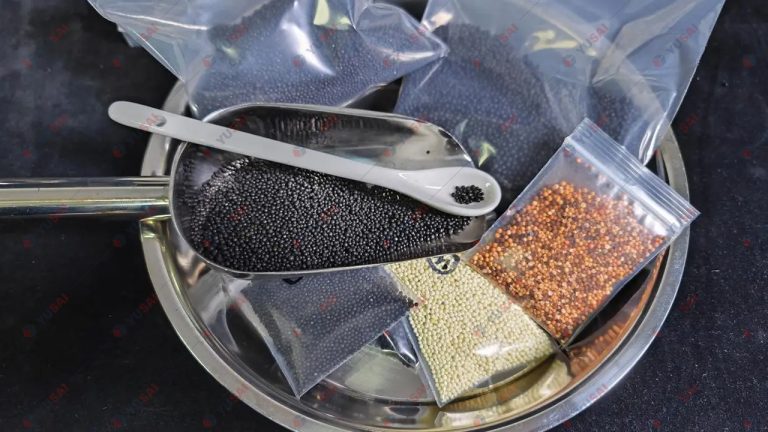
- Mechanical Pre-treatment Unit (Crushing, Milling & High-Voltage Electrostatic Separator) Waste PCBs go through multi-stage shredding and fine grinding down to 0.1–0.5 mm. Air classification + high-voltage electrostatic separator separate metal particles from non-metal resin & fiberglass by density and conductivity. Metal recovery rate exceeds 95%. Non-metallic resin powder can be separately recycled.
- Two-Stage Liquid-Liquid Molten Enrichment Unit (Core Innovation)
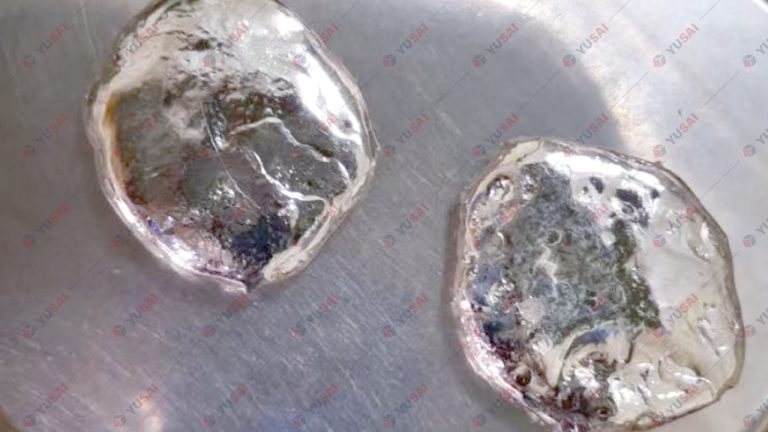
- Stage 1: Fe-Cu high-temperature liquid separation system, operating at 1150–1380℃, with C or Si as phase separation promoter. By controlling stirring and holding time, base metals such as Fe, Ni, Co transfer into Fe-rich melt, while gold and silver precious metals are selectively concentrated into Cu-rich melt. The upper Fe-rich melt can be recycled for next batch.
- Stage 2: Cu-Pb low-temperature liquid separation system, 950–1100℃, with Al or Zn additive to improve phase separation. Impurities like Sn, Sb migrate into Pb-rich phase, and precious metals are further concentrated inside Cu-rich phase. Bottom Pb-rich melt is recycled for repeated use.
After two-stage enrichment, precious metal content in Cu-rich material reaches 0.2%~0.42%. Precious metals are highly concentrated, drastically cutting feed quantity for subsequent leaching.
- Precious Metal Extraction Unit (Two Optional Routes) ✅ Route A: H₂O₂ + Sulfuric Acid Leaching & Solid-Liquid Separation Cu-rich concentrate is leached by mixed solution of 30% hydrogen peroxide and sulfuric acid solution (sulfuric acid: water =1:3) at 40~50℃. Base metals like copper dissolve while gold and silver remain in solid residue. After filtration, precious metal content in leaching residue exceeds 20%, ready for further refining into pure Au & Ag.
✅ Route B: Copper Electrolysis Refining Cu-rich material is used as anode in electrolysis. High-purity copper deposits on cathode. Anode sludge is filtered and collected, containing ≥10% gold & silver, directly sent to precious metal refining.
Advantages vs Traditional Recycling Technologies
表格
| Technology | Main Drawbacks | Our Complete Plant Solution |
|---|---|---|
| Standalone physical separation | Only separates metal / non-metal; precious metals unrecoverable directly | Physical pre-treatment + two-step molten enrichment for selective precious metal concentration |
| Traditional hydrometallurgy | Heavy reagent consumption, huge wastewater, severe secondary pollution | Only small volume of concentrated Cu-rich material enters leaching; reagent dosage sharply reduced |
| Traditional pyrometallurgy | Toxic flue gas from combustion, air pollution | Closed smelting system, recycled molten phases, centralized flue gas treatment |
| Bioleaching | Hard strain scale-up, slow leaching, low throughput | Continuous metallurgical enrichment, stable industrial mass production |
Key Features
- Two-stage directional enrichment for Au & Ag: Metal selective partitioning in molten alloy concentrates precious metals in two steps, lowering operating cost.
- Recyclable molten phases: Fe-rich and Pb-rich melt reused batch after batch, high raw material utilization, less auxiliary materials.
- Dual extraction options: Customers choose hydrometallurgy or electrolysis based on local EHS regulation and site condition.
- Modular equipment design: Crushing, electrostatic separator, smelting unit, leaching/electrolysis modules can be combined flexibly; customized according to daily capacity.
- Controlled environmental impact: Less corrosive chemicals, centralized wastewater and flue gas treatment, compliant with global EHS standards.
Application
Waste printed circuit boards: computer motherboards, TV boards, mobile phone PCBs, industrial control boards, gold-plated electronic scraps. Ideal for e-waste recyclers, precious metal smelters and solid waste recycling enterprises.
Manufacturer Support
✅ Direct factory supply, competitive price without middleman
✅ Custom process layout according to your target capacity
✅ Raw material test to verify precious metal enrichment performance
✅ Overseas on-site installation, commissioning & operator training
✅ Long-term spare parts & remote technical support
✅ OEM / ODM available; CE certification & equipment test reports can be provided
Contact us for process flow drawing, quotation and project reference videos.