Intro
Precious metal smelting and precious metal recovery processes generate flue gas rich in sulfur dioxide (SO₂). Strict global emission regulations force smelters to select reliable flue gas desulfurization (FGD) solutions. Dry FGD and wet FGD are two mainstream routes for SO₂ removal in gold, silver, palladium and platinum smelting plants. Each technology carries distinct strengths and drawbacks, which directly impact capital investment, operating cost, by-product handling, water consumption and secondary pollution control. This article compares dry and wet desulfurization to help precious metal operators make better technical decisions.
Dry Flue Gas Desulfurization (Dry FGD)
Dry desulfurization completes SO₂ removal in solid-gas phase without liquid slurry. Typical processes include activated carbon adsorption and lime powder injection, also iron oxide sorbent method widely used in metallurgical gas treatment.
Advantages of Dry FGD
- High desulfurization efficiency under specific operating conditions When handling high-sulfur flue gas from precious metal smelting, activated carbon adsorption can achieve over 90% SO₂ removal rate. Activated carbon has huge specific surface area and abundant pore structure to adsorb SO₂ molecules efficiently.
- Compact equipment & lower footprint Dry FGD system layout is relatively simple. The lime powder injection system mainly consists of silos and powder injection devices. Unlike wet FGD with absorption towers, circulation pumps and liquid processing units, dry FGD occupies only 30%–50% land area compared with wet systems of the same gas handling capacity. It saves construction budget and suits plants with limited site space.
- Solid by-products, easy disposal & recycling Dry desulfurization generates solid sulfur-containing products. For iron oxide desulfurization, the reaction product is solid iron sulfide, which can either be recycled or safely landfilled. There is no large volume of wastewater loaded with heavy metals such as mercury, lead and cadmium, greatly reducing risks of secondary pollution.
- Zero wastewater discharge No process wastewater is produced in dry FGD. This feature delivers obvious advantages for precious metal refineries located in arid or water-short regions. It eliminates investment for wastewater treatment stations and cuts water consumption, which is critical for sustainable mining & smelting projects.
Limitations of Dry FGD
- Higher operational cost Dry sorbent consumption is large and sorbent materials are costly. Activated carbon sorbents cost thousands of US dollars per ton. Adsorption capacity gradually declines during continuous operation, requiring regular replacement. Some dry processes need elevated temperature or pressure to maintain reaction activity, bringing extra energy expenses.
- Strict operating condition requirements Dry FGD performance is sensitive to inlet flue gas parameters: gas temperature, humidity and SO₂ concentration. Low temperature and high humidity will inhibit sorbent activity and sharply reduce desulfurization efficiency. For extremely high sulfur load from precious metal ore roasting, dry technology may fail to meet stringent international emission standards.
- Complex sorbent regeneration Many solid sorbents need regeneration to recover desulfurization capacity. Metal oxide sorbent regeneration requires high temperature and controlled reducing atmosphere. It demands special equipment and complicated operation, increasing management difficulty and maintenance cost for smelters.
Wet Flue Gas Desulfurization (Wet FGD)
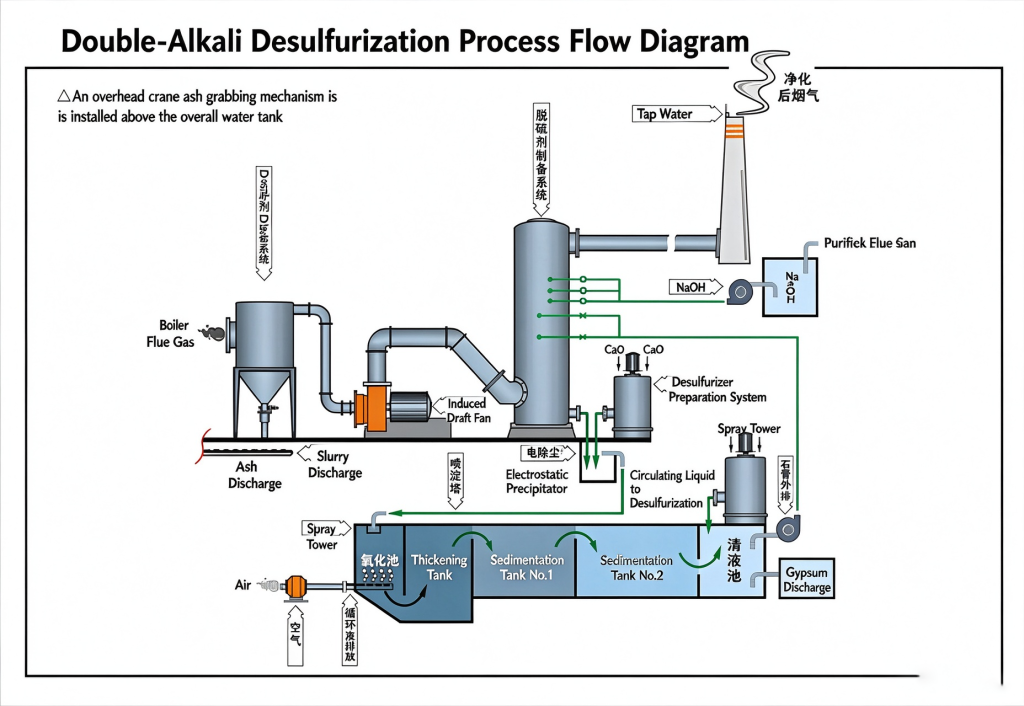
Wet FGD uses liquid or slurry absorbent. Limestone-gypsum scrubbing is the most mature wet process, widely adopted in large-scale non-ferrous and precious metal smelters.
Advantages of Wet FGD
- Superior desulfurization efficiency Wet FGD achieves over 95% SO₂ removal under optimized operating parameters. It relies on gas-liquid contact; SO₂ dissolves and reacts rapidly in liquid phase, delivering stable and high removal performance. It is the preferred choice when very low SO₂ emission limits are mandatory.
- Strong adaptability to variable flue gas conditions Wet scrubbing tolerates fluctuating SO₂ concentration in smelting off-gas. Whether for high-sulfur precious metal concentrate roasting gas or low-sulfur tail gas, operators can adjust absorbent feeding rate to maintain stable emission performance. It works well for smelting lines with unstable feed ore composition.
- Well-proven, mature technology Wet FGD has decades of global application history. Complete standards are available for equipment design, fabrication and daily maintenance. A large number of metallurgical FGD references worldwide reduce technical risks for new precious metal smelting and refining projects.
Limitations of Wet FGD
- Severe equipment corrosion The absorbent slurry is acidic, causing strong corrosion on tower internals, spray nozzles and pipelines. Corrosion accelerates under high temperature and high SO₂ loading. Regular anti-corrosion coating and component replacement are required, pushing up maintenance cost and operational risks.
- Large volume of heavy metal-containing wastewater Wet FGD generates plenty of wastewater containing mercury, lead, cadmium, suspended solids and acidic compounds. Direct discharge causes severe environmental damage. Wastewater treatment workflow is complicated and expensive; treatment cost can reach tens to hundreds of US dollars per ton of wastewater. For precious metal plants, heavy metal separation from scrubber wastewater adds extra process complexity.
- High power consumption Wet systems require large circulation pumps, agitators and auxiliary equipment to circulate absorbent slurry. Medium-sized wet scrubber units are equipped with circulation pumps rated at hundreds of kilowatts. Continuous power consumption raises overall production cost for smelters.

Final Selection Tips for Precious Metal Smelters
- Choose Dry FGD: Sites with water shortage, limited land space, projects prioritizing zero wastewater, small or medium scale precious metal recovery lines with stable flue gas temperature & humidity.
- Choose Wet FGD: Large-scale smelters, high and fluctuating SO₂ concentration, locations requiring ultra-low SO₂ emission, sufficient water supply and budget for wastewater & corrosion management.
Conclusion
There is no universal “better” desulfurization technology for precious metal smelting. The final selection must balance gas characteristics, local water resources, emission codes, capital budget and long-term operating expenditure. Many modern precious metal plants also consider hybrid solutions to combine the merits of dry and wet FGD for sulfur removal and heavy metal control.